
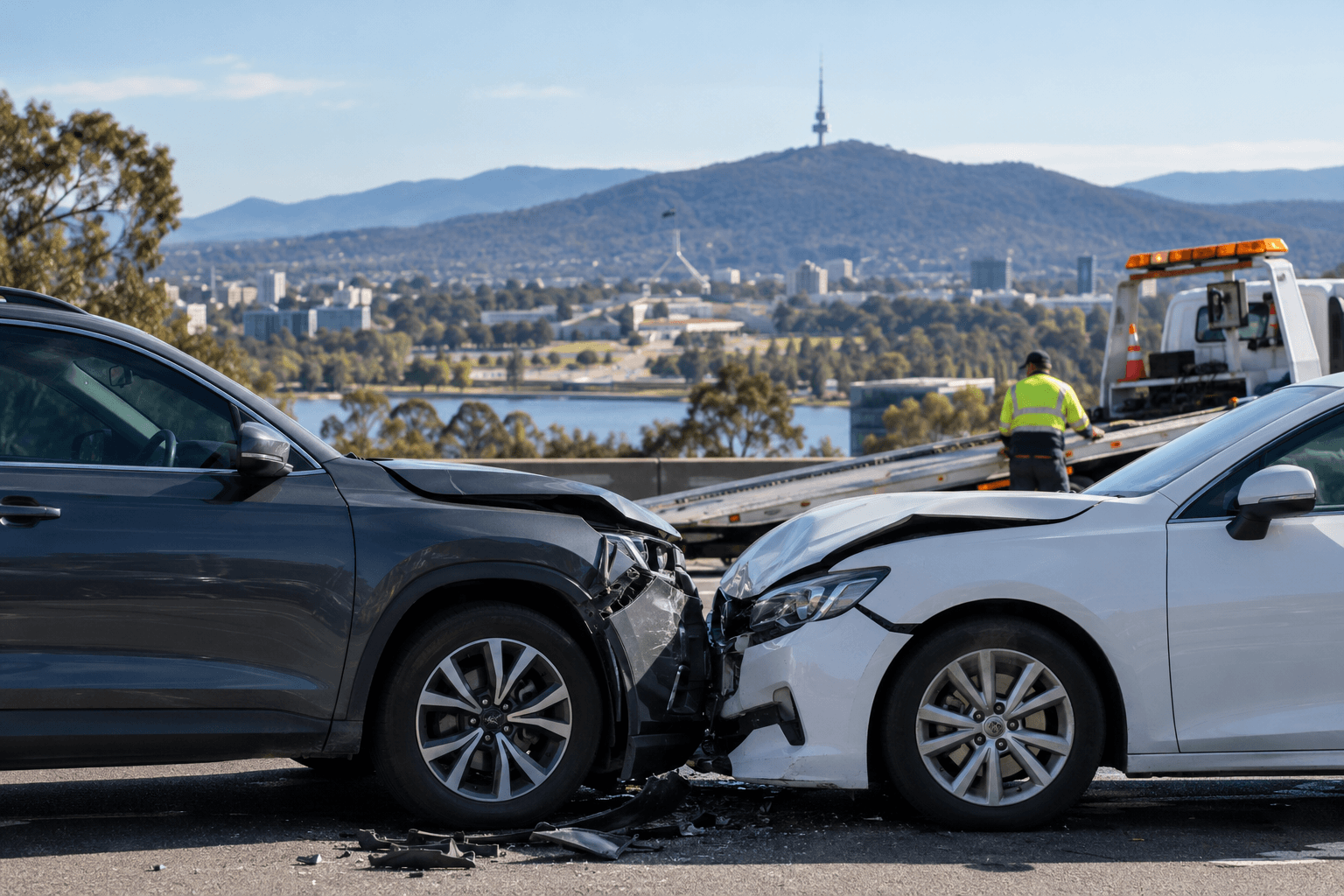
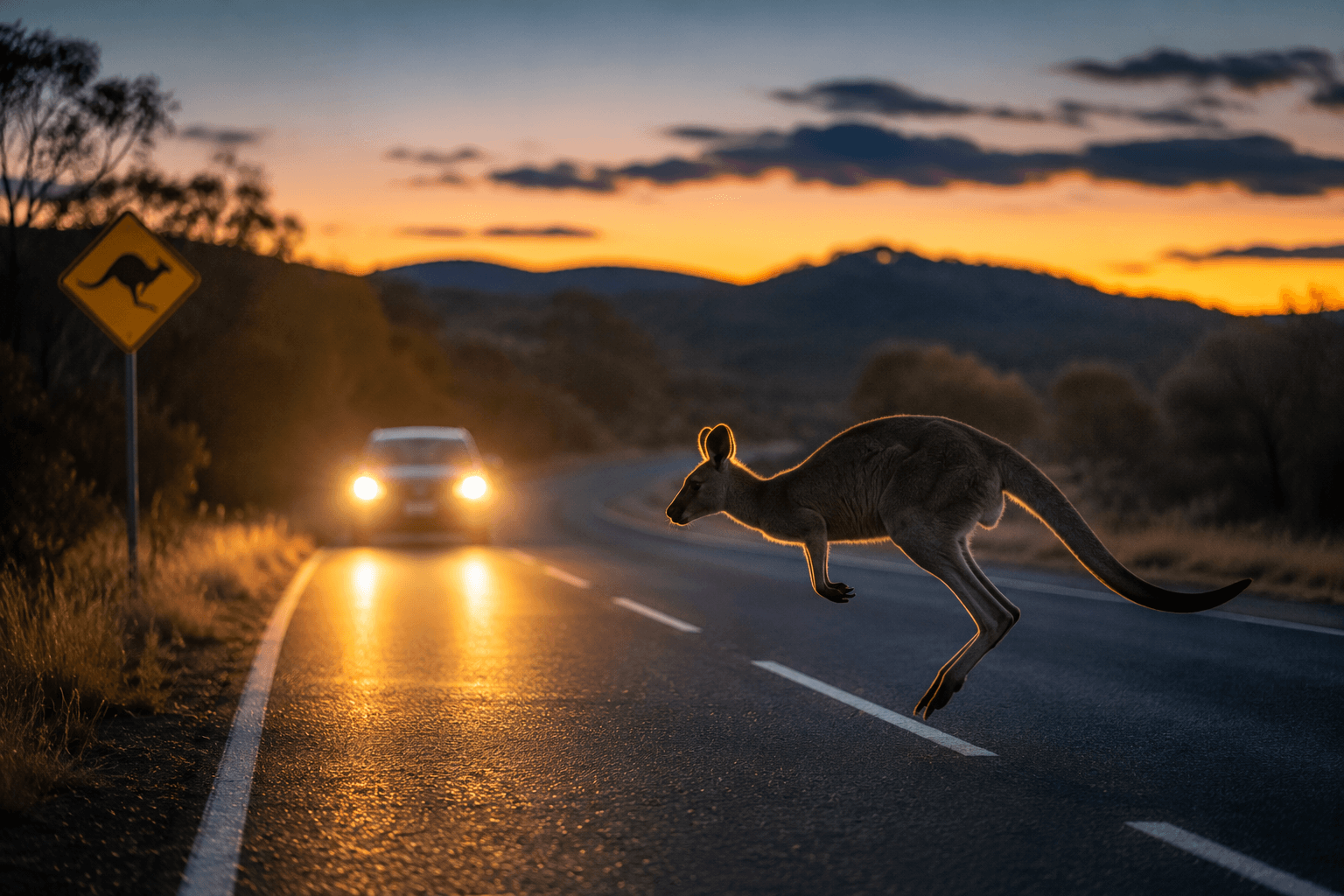
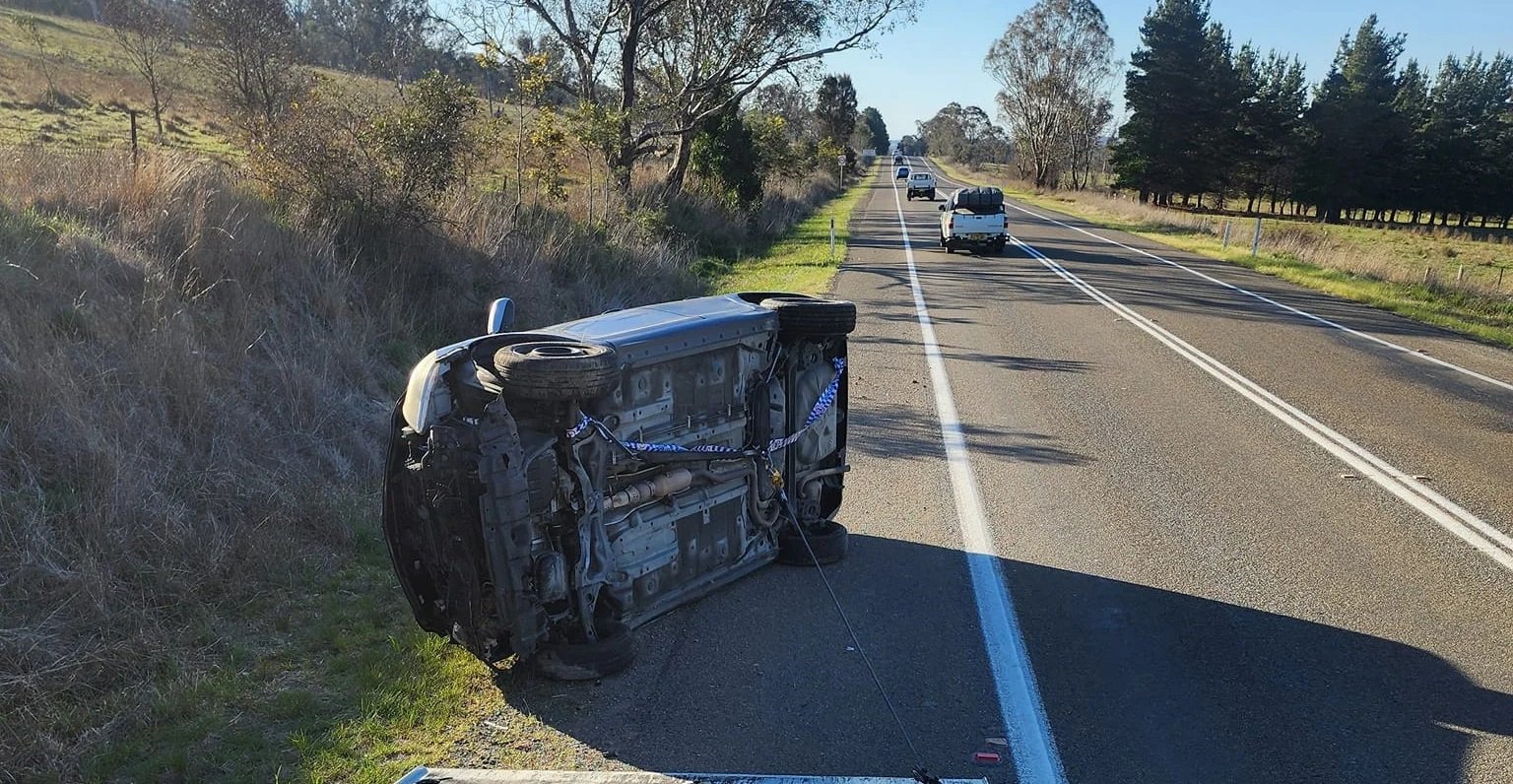
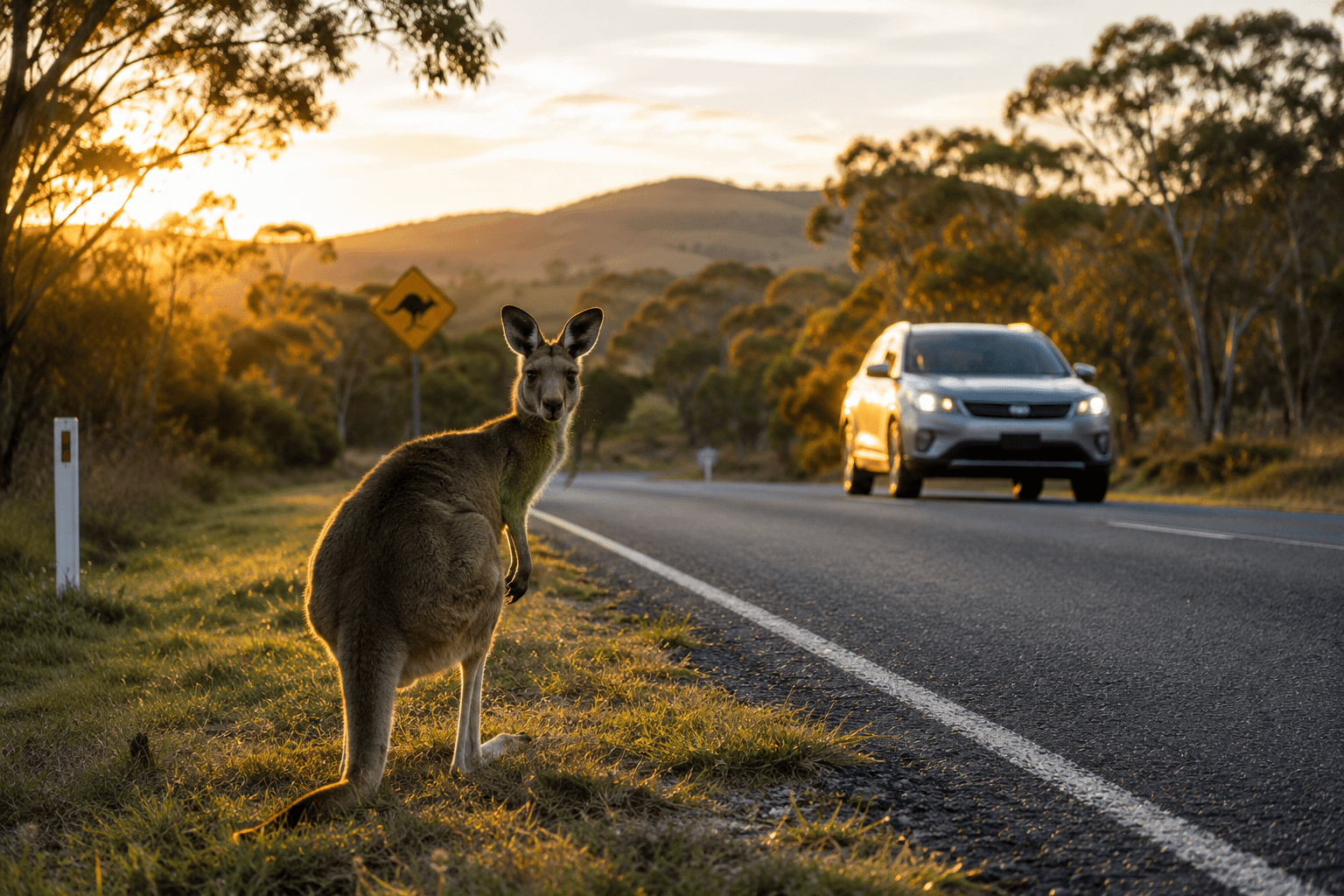
Hitting a kangaroo can happen with very little warning. One moment the road is clear; the next, an animal is directly in front of your vehicle.
It is also a common problem around Canberra. ACT Parks and Conservation Service attended more than 4,450 animal-vehicle collision callouts across Canberra in 2024–25, according to ACT Government information released in 2026.
First things first: If you’ve just hit a kangaroo, your first priorities are keeping yourself and other road users safe, reporting the injured animal and working out whether your vehicle is safe to drive.
I've Hit a Kangaroo in Canberra, What Should I Do?
If you’ve just been involved in a collision, follow these steps:
- Stop somewhere safe. If the vehicle can still be moved safely, get it out of the traffic lane.
- Turn on your hazard lights and remain aware of approaching vehicles.
- Check yourself and your passengers for injuries. Call 000 if anyone is seriously injured or there is an immediate danger.
- Do not approach an injured adult kangaroo. A frightened or injured kangaroo can be dangerous.
- Report the animal to Access Canberra on 13 22 81. Give them the most precise location you can.
- Report the motor vehicle collision to ACT Policing in accordance with ACT collision-reporting requirements.
- Check your vehicle before driving any further. A car can still start despite having damage that makes it unsafe to drive.
- Arrange towing if you’re unsure the vehicle is safe. Don’t risk turning collision damage into another incident.
Once everyone is safe, you can deal with the animal, reporting requirements and your damaged vehicle in more detail.
Get Yourself and the Vehicle Out of Danger First
Your immediate concern after the impact should be what is happening around you, not the kangaroo.
Stay in control of the vehicle and pull over somewhere safe if you can. Turn on your hazard lights and check yourself and your passengers for injuries.
Be particularly careful if the collision happens at night, around a bend or on a higher-speed road. Other motorists may have very little time to see your stopped vehicle, the animal or debris from the collision.
Avoid standing in a traffic lane to inspect the damage or reach the kangaroo. If getting out of the vehicle would expose you to approaching traffic, stay somewhere protected and wait for assistance.
Call 000 if someone is seriously injured or there is an immediate threat to life.
ACT Policing may also need to attend when circumstances require police assistance, including when a damaged vehicle is blocking the road and cannot be moved, or there is an ongoing danger to people at the scene.
Don't Approach an Injured Kangaroo
Seeing an injured kangaroo can make you want to help immediately, but approaching it is not necessarily the safest way to do so.
Parks ACT specifically warns people not to approach an injured adult kangaroo. A kangaroo that is hurt, frightened or unable to escape normally can react defensively and deliver a powerful kick.
Your own safety comes first.
From a safe position, try to establish:
- where the kangaroo is;
- whether it appears injured, dead or has moved away;
- which side of the road it is on;
- the direction it travelled if it left the scene.
Do not chase an injured kangaroo into nearby bushland. You also shouldn’t put yourself in the path of traffic to move an animal from the road.
The most useful thing you can usually do is record its location accurately and report it so the appropriate wildlife responder can attend.
What About a Joey?
A female kangaroo involved in a collision may have a joey in her pouch or nearby, so this is worth mentioning when you report the incident.
However, don’t put yourself in danger trying to check a pouch.
If the adult kangaroo is alive, Parks ACT advice not to approach an injured adult remains important. If reaching the animal would require walking into an active traffic lane or otherwise putting yourself at risk, stay clear.
Tell the wildlife responder that you are concerned a joey may be present and follow the instructions they give you.
Report the Kangaroo to Access Canberra
In the ACT, accidents involving injured wildlife should be reported to Access Canberra on 13 22 81. Wildlife collision reports can be made 24 hours a day.
Give the responder enough information to locate the animal quickly. This is particularly important if the collision occurred at night or the kangaroo moved away after being struck.
Useful details include:
Information | What to provide |
Location | Road name and the closest intersection, landmark or other identifiable point |
Direction | The direction you were travelling |
Road position | Which side of the road the animal is on |
Animal | Kangaroo or another species, if you can identify it safely |
Condition | Whether it appears injured, dead or has moved away |
Movement | The direction it went if it left the collision site |
Timing | Approximately when the collision happened |
Don’t delay reporting the incident because you cannot provide every detail. Give the most accurate information you have.
This is a routine part of wildlife management in Canberra. ACT Government information published in 2026 indicates Parks and Conservation Service personnel attend more than 2,000 kangaroo collisions across the ACT each year.
What if the Kangaroo Is Dead or Has Run Away?
If the kangaroo appears dead, report its location. You don’t need to put yourself in danger trying to move a large animal from the road.
If the kangaroo runs away, report the incident anyway. An animal being able to move does not necessarily mean it is uninjured.
Try to remember where you last saw it and which direction it travelled. ACT wildlife responders have noted that injured animals can move away from the original collision location, making accurate information from motorists particularly valuable.
Report the Vehicle Collision to ACT Policing
Reporting the wildlife and reporting the road collision are two separate things.
A simple way to remember the distinction is:
Who? | Why? |
Access Canberra – 13 22 81 | Report the injured wildlife |
ACT Policing | Report the motor vehicle collision |
000 | Serious injury or immediate danger |
ACT Policing states that motor vehicle collisions in the ACT must be reported to police within 24 hours. In most cases where police attendance at the scene isn’t required, this can be done through the ACT Policing online collision reporting process.
After submitting the report, keep your collision report number. Your insurer may ask for it if you make a claim for the damage.
Police attendance may be required in more serious circumstances, including when someone needs to be transported to hospital, a damaged vehicle is blocking the road and cannot be moved, there is an ongoing danger to a person, or alcohol or drug involvement is alleged.
Once the immediate safety, wildlife and reporting issues have been dealt with, the next question is important: is your car actually safe to drive?
Check Your Car Carefully Before Driving Away
A kangaroo collision can cause considerably more damage than the outside of the vehicle initially suggests.
The car may still start. It may even appear driveable. That doesn’t necessarily mean continuing your journey is a good idea.
Before moving off, look for obvious signs of damage without putting yourself in danger beside the road. Pay particular attention to:
- leaking coolant, oil or other fluid;
- a damaged wheel or tyre;
- steering that feels different or doesn’t respond normally;
- loose bodywork around the bumper or wheel arches;
- components scraping against the tyre or road;
- significant front-end damage;
- broken headlights or indicators;
- warning lights on the dashboard;
- rising engine temperature;
- deployed airbags;
- smoke, unusual smells or unfamiliar noises.
Front-end impacts can affect more than the bumper. Depending on where and how the kangaroo was struck, components around the radiator, cooling system, lights, wheel area and bodywork can also be damaged.
If something doesn’t look, sound or feel right, don’t assume you can simply drive home because the engine still runs.
“One thing we see after animal strikes is drivers looking at the car, seeing that it still starts and assuming it’s okay to drive. A kangaroo can do a lot of damage around the front of a vehicle. If you’ve got leaking fluid, damage around a wheel, loose parts, or you’re simply not sure, it’s safer to have the vehicle recovered than find out something is wrong once you’re back on the road.”
Joshua Harrison, Founder, Underground Towing & Salvage
Joshua has more than 11 years of experience in towing and vehicle recovery, including recovering accident-damaged vehicles around Canberra and the ACT.
If there is any doubt about the condition of the vehicle, the safest decision is to stop there and arrange recovery rather than testing it on the road.
When Should You Get the Car Towed?
Not every kangaroo collision leaves a vehicle undriveable, but you shouldn’t continue simply because the engine starts and the car can move.
Arrange a tow if:
- the vehicle won’t start;
- a tyre or wheel has been damaged;
- the steering feels abnormal;
- coolant, oil or another fluid is leaking;
- the engine is overheating;
- airbags have deployed;
- headlights or other essential lights are badly damaged;
- the bumper, undertray or other components are loose or rubbing against a wheel or the road;
- there is substantial front-end damage; or
- you’re not confident the vehicle is safe to drive.
If you’re unsure, don’t risk driving the vehicle to find out.
ACT Policing allows motorists to arrange their own towing company when a damaged vehicle needs towing but isn’t blocking the roadway. If the vehicle is creating a hazard and cannot be moved, tell police when reporting the collision.
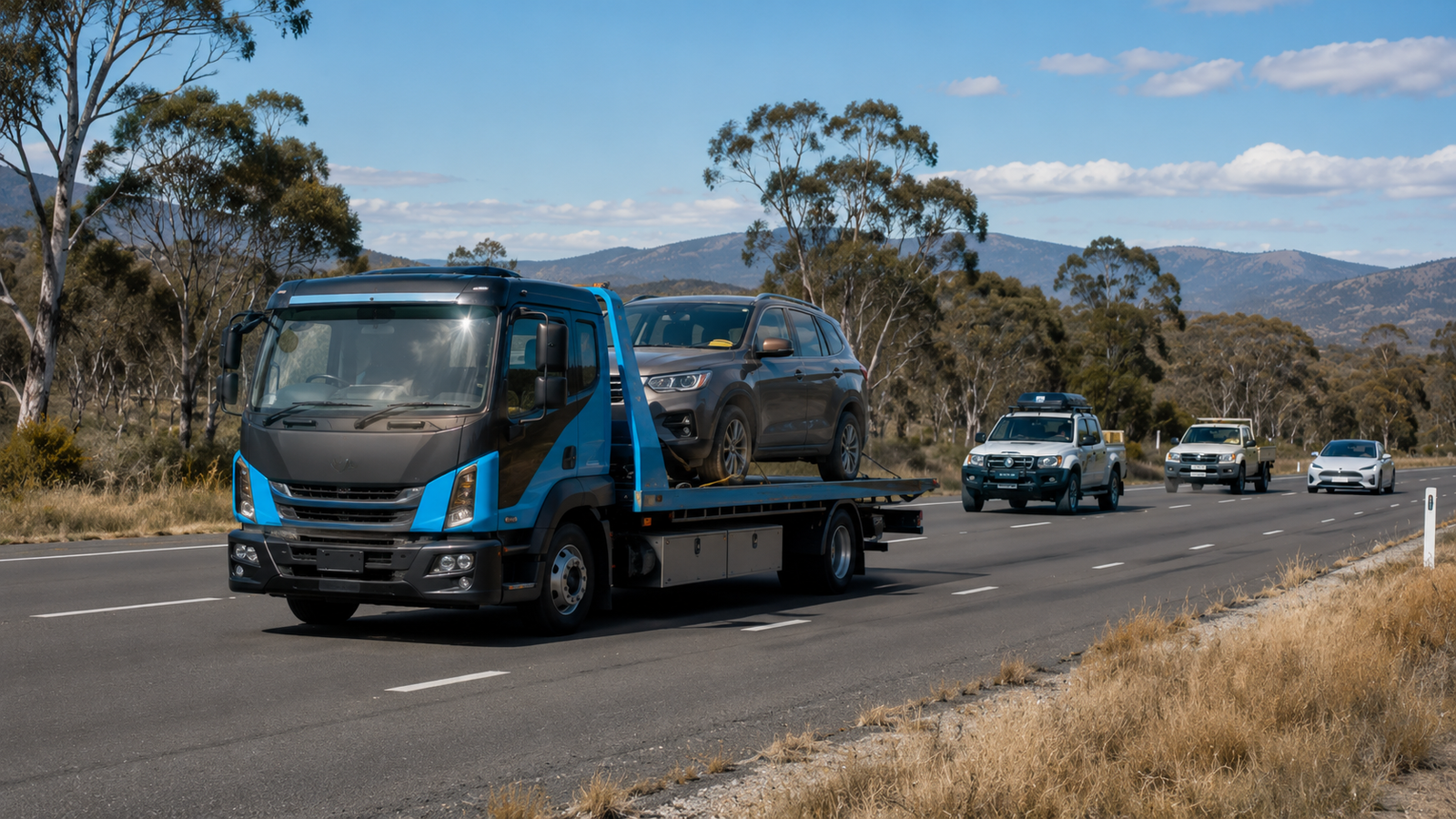
Underground Towing & Salvage provides a tow truck Canberra service for accident-damaged vehicles throughout Canberra and the ACT. We can recover the vehicle from the roadside and transport it to your home, preferred repairer or another requested destination.
If cost is one of your concerns, our guide to how much a tow truck costs in Canberra explains the main factors that can affect the price of a tow.
What if You Hit a Wombat, Wallaby or Other Wildlife?
Kangaroos aren’t the only animals Canberra drivers can encounter on the road.
Wallabies, wombats and other native wildlife can also be involved in vehicle collisions. The exact response required for the animal may differ, but the immediate priorities remain much the same.
Protect yourself first. Stop somewhere safe, turn on your hazards and check for injuries.
Don’t create another accident trying to reach the animal. Stay out of active traffic lanes and don’t approach wildlife that could injure you.
Report the collision and location. Access Canberra accepts reports involving injured wildlife in the ACT. ACT Wildlife can also provide advice about sick, injured and orphaned native animals.
For wombats specifically, Wombat Rescue provides assistance with injured and orphaned wombats in the ACT region.
This is particularly important because an animal that disappears after an impact may still be seriously injured. There may also be dependent young involved.
The same caution applies to your vehicle. A collision with a wombat or another large animal can damage the underside, bumper, wheels or other components even when the car remains running.
Why Kangaroo Collisions Are Such a Risk Around Canberra
Wildlife collisions aren’t an unusual event on Canberra roads.
ACT Government information released in 2026 shows that Parks and Conservation Service attended more than 4,450 animal-vehicle collision callouts across Canberra during 2024–25, compared with 3,864 in the previous financial year.
Kangaroos account for a substantial part of that workload, with ACT Government information indicating that more than 2,000 kangaroo collisions are attended across the ACT each year. Our analysis of Canberra kangaroo collision statistics looks more closely at when these crashes occur, where drivers face greater risk and the consequences for motorists.
Several characteristics of Canberra also bring vehicles and kangaroos into close proximity. Bushland, grasslands and nature reserves sit alongside suburbs and major roads, so wildlife movement can intersect with everyday commuting.
The risk isn’t constant throughout the day or year.
Dawn, Dusk and Low Light
Kangaroos are more likely to be moving during periods when visibility for motorists is already reduced. ACT authorities identify dawn, dusk and low-light conditions as important periods for wildlife collision risk.
Winter can be particularly problematic because normal commuting times overlap more closely with darkness and periods of animal movement.
A kangaroo emerging from vegetation or crossing a road can leave very little reaction time, particularly at higher speeds.
Dry Weather Can Change Where Kangaroos Move
Conditions around Canberra can also affect where animals search for food.
During dry periods, reduced vegetation can cause kangaroos to expand their usual range. This can bring them closer to roads and other areas they may not normally frequent as heavily.
Rain can create another issue. Drainage and runoff can produce greener grass along road verges, potentially attracting kangaroos towards the roadside.
This means wildlife risk shouldn’t be treated as something that only exists on remote country roads. Canberra motorists can encounter kangaroos surprisingly close to developed areas.
How to Reduce Your Risk of Hitting a Kangaroo
You cannot control when an animal enters the road, but you can give yourself more time and space to react.
Slow Down When Wildlife Is Nearby
If you see kangaroos or other wildlife beside the road, reduce your speed and prepare for unexpected movement.
Don’t assume an animal looking away from the road will remain where it is. Wildlife can change direction suddenly.
Take Extra Care Around Dawn and Dusk
Be particularly alert around dawn, dusk and at night, especially where roads pass through or alongside grassland, bushland and nature reserves.
In winter, remember that your morning or afternoon commute may occur in much lower light than at other times of the year.
Scan the Roadside, Not Just the Lane Ahead
Look towards road verges and the edges of vegetation as you drive. Spotting movement beside the road earlier gives you more time to reduce speed safely.
Wildlife warning signs should also be taken seriously. They are there because animals are known to occur in the surrounding area.
Stay Alert After Seeing One Animal
If a kangaroo crosses the road, continue watching the surrounding area rather than immediately accelerating again.
Other animals may be nearby, even though you cannot assume another kangaroo will always follow.
Keep Control of the Vehicle
A sudden encounter with wildlife can trigger an instinctive reaction to swerve.
Your priority is maintaining control of the vehicle and avoiding an action that puts you, your passengers or another road user in greater danger. Drive at a speed appropriate for the visibility and conditions, so you have as much time as possible to respond.
No amount of careful driving can guarantee that a wildlife collision won’t happen. The aim is to reduce the likelihood of one and give yourself more time to make a controlled decision if an animal does enter the road.
Need a Tow After Hitting a Kangaroo in Canberra?
If you’ve hit a kangaroo, wombat or other wildlife and your vehicle has been damaged, don’t keep driving if you’re unsure it’s safe.
Underground Towing & Salvage can recover accident-damaged vehicles throughout Canberra and the ACT and transport your vehicle to your home, repairer or another requested location.
If you need your vehicle recovered after a wildlife collision, contact Underground Towing & Salvage, and we’ll help get you and your vehicle safely off the road.