


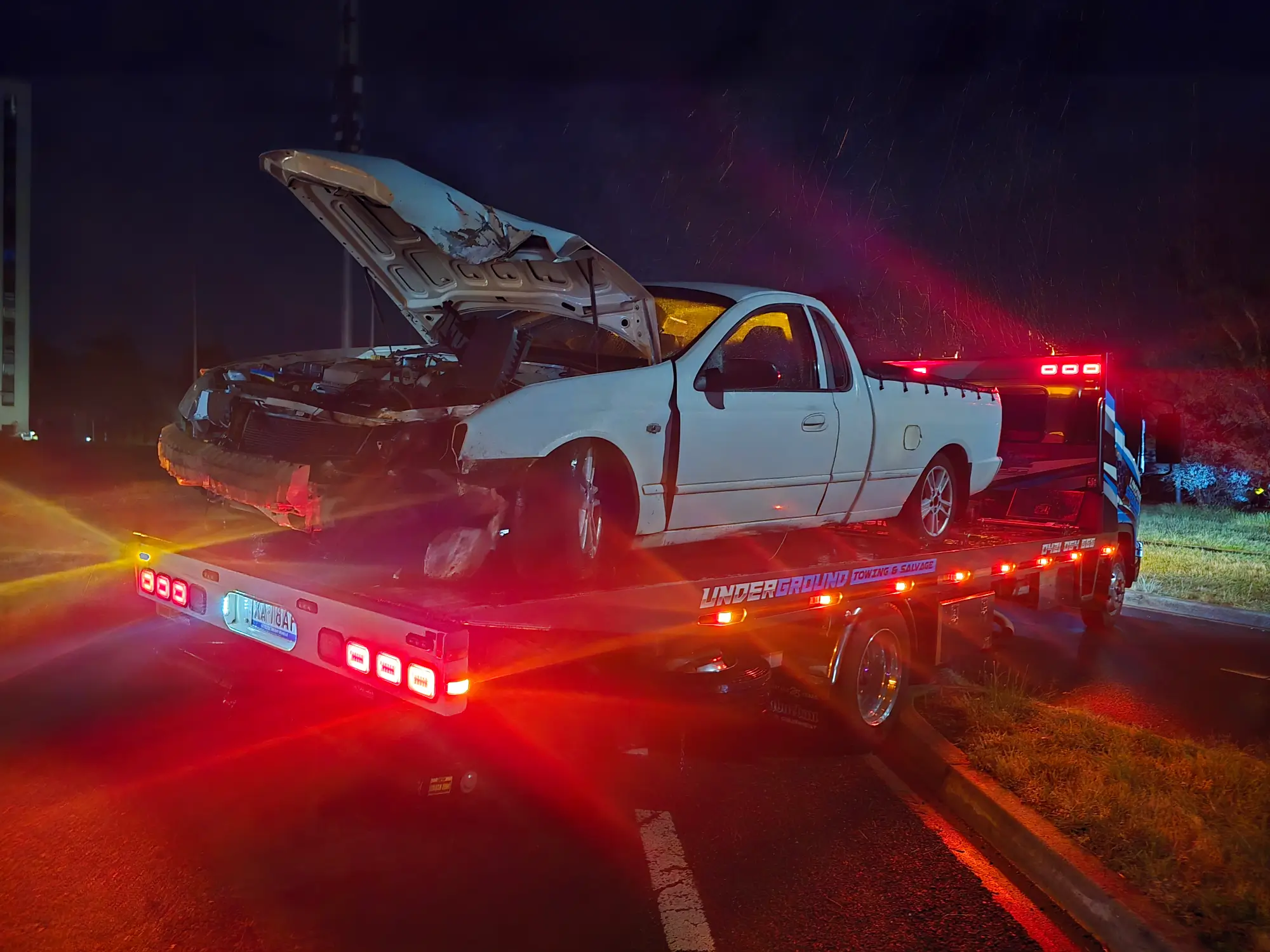
Being involved in a vehicle accident is rarely something drivers are prepared for. Even a minor collision can be disorienting, stressful and time-sensitive. Knowing what to do in the moments that follow can help protect your safety, support insurance processes and reduce the risk of additional problems later.
This guide sets out a clear, practical checklist for what to do immediately after an accident in Canberra. It explains how accident towing works, what to look for in a car towing service and how accident towing differs from other types of towing.
Step 1 — Prioritise safety immediately after an accident
Check whether anyone has been injured and call emergency services if required. If it is safe to do so, focus on reducing immediate risks by:
- Switching on your hazard lights to alert other drivers
- Moving yourself and passengers away from active traffic where possible
- Staying clear of blind corners, intersections or fast-moving vehicles
If your vehicle can be moved safely, positioning it out of traffic may reduce the risk of further incidents. If it cannot be moved, remain in a safe position until help arrives.
Step 2 — Document the scene while details are clear
Use your phone to record clear and accurate details from the scene, including:
- Photos of all vehicles involved and visible damage
- Licence plates and any identifying features
- Road signs, intersections or nearby landmarks
- The general position of vehicles after the incident
It is also important to exchange basic details with other drivers such as names, contact numbers, vehicle registration details and insurer information.
Step 3 — Report the accident in the ACT
In the ACT, vehicle crashes on roads and road-related areas generally need to be formally reported if police do not attend the scene. The ACT Government provides an online crash reporting process that allows drivers to submit details once everyone is safe and vehicles have been moved. Reports are typically completed online, and a reference number is issued for your records. Having this reference number can be useful when dealing with insurers or arranging accident towing in Canberra.
Step 4 — Decide whether you need accident towing
Accident towing is the safest option if your vehicle:
- Is not safe to drive due to steering, braking or structural damage
- Has leaking fluids or new warning lights that appear after the impact
- Is positioned in a hazardous or obstructive location
- Cannot be moved without specialist equipment
Attempting to drive a damaged vehicle can increase safety risks and lead to further issues. A tow truck Canberra can assess the situation and transport the vehicle safely.
How accident towing differs from other towing services
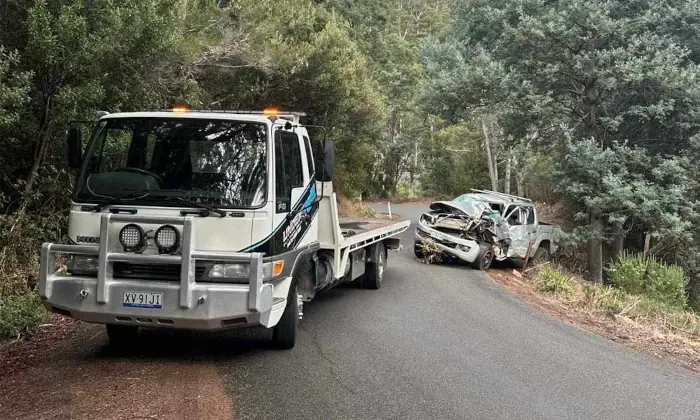
Accident towing is not the same as standard breakdown towing. A breakdown may involve a flat battery, mechanical issue or minor fault where the vehicle is otherwise intact. Our Australian towing statistics provide additional insight into the types of incidents that commonly require towing services across the country. Accident towing, by contrast, often involves damaged vehicles, compromised structures or difficult access conditions.
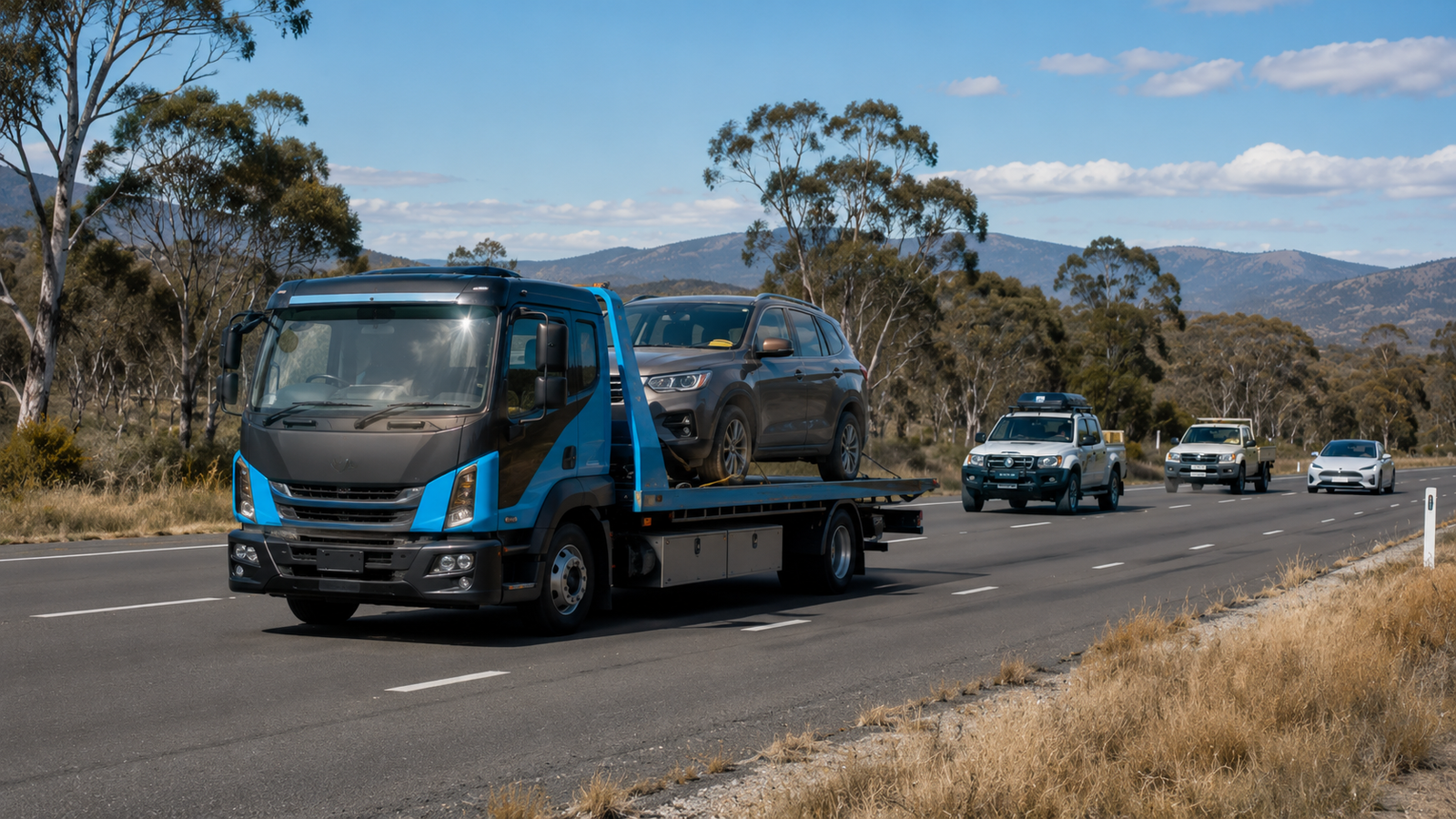
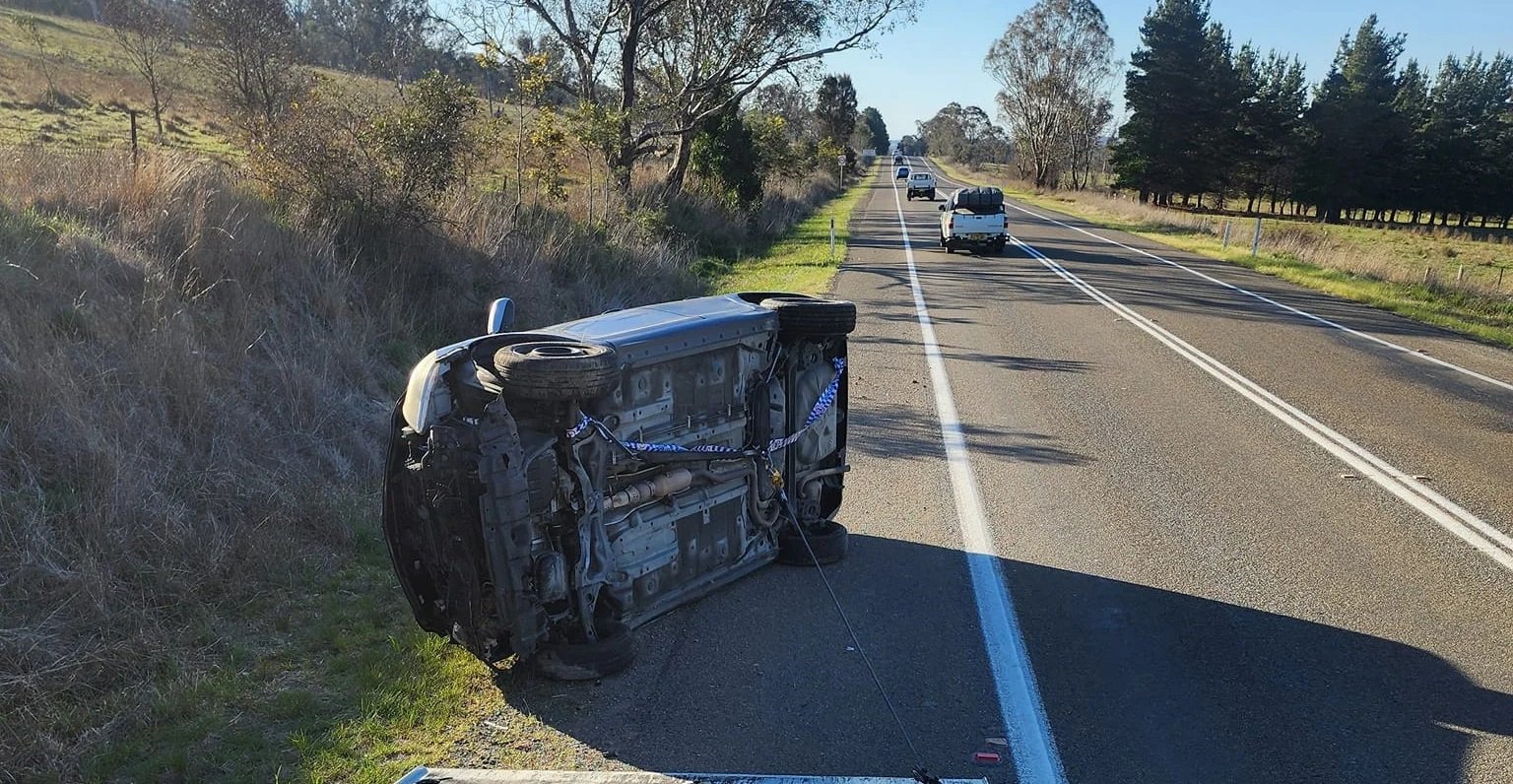
Because of this, accident towing in Canberra may require specialised equipment and experienced operators. Vehicles involved in collisions can be at awkward angles, have locked wheels or be located in tight or low-clearance spaces. Proper handling is essential to avoid further damage during recovery.
This is also why accident towing differs from general car towing service work such as planned relocations. The focus is on safety, controlled recovery and careful handling rather than speed alone.
What to ask before agreeing to a tow
Before authorising a tow, it is reasonable to ask a few clear questions. A reputable car towing service should be able to explain:
- Whether the operator is licensed and insured
- If they regularly handle accident recovery rather than general towing
- Where the vehicle will be taken, and whether you can choose the destination
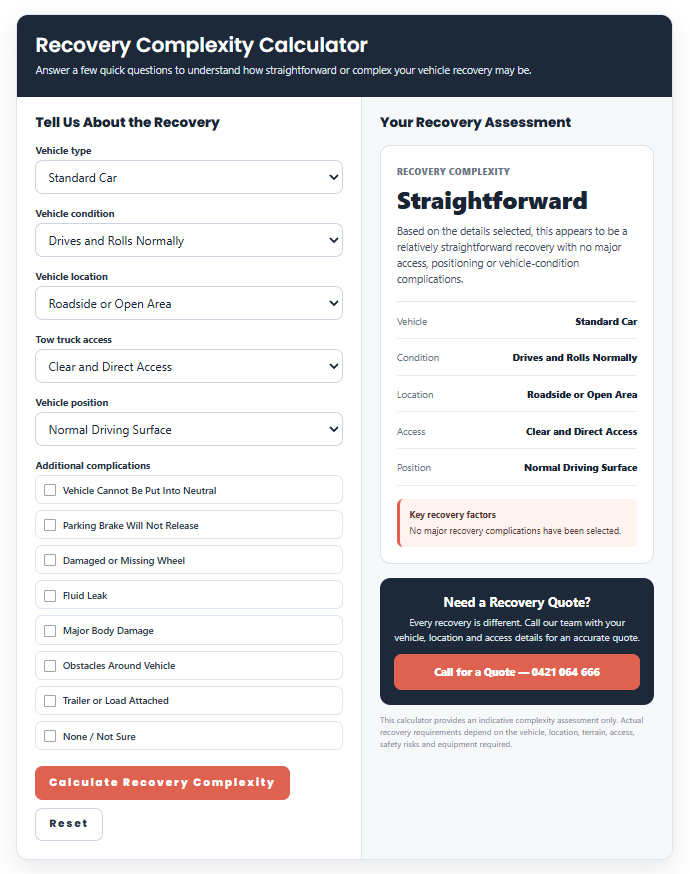
- How pricing is calculated and what factors may affect the final cost
Clear answers upfront can reduce confusion and help you stay in control of the decision. If information is vague, or you feel pressured to proceed immediately, it may be worth pausing and reassessing your options.
Understanding accident towing costs
Accident towing costs vary depending on several practical factors, such as:
- Distance between the accident scene and destination
- Vehicle size, condition and level of damage
- Access challenges at the scene
- Whether specialised recovery equipment is required
- Time of day, including after-hours callouts
A transparent towing provider should be able to explain these factors before the vehicle is moved, even if an exact total cannot be confirmed immediately.
Coordinating towing with your insurer
After an accident, insurers typically require certain details to progress a claim. This may include photos of the damage, a crash report reference number and information about where the vehicle has been taken.
Some drivers prefer to contact their insurer before arranging accident towing, while others organise towing first and notify their insurer afterwards. Either approach can work, provided the insurer receives accurate information in a timely manner.
If you are unsure, asking your insurer what information they need can help prevent delays. Clear communication between you, the towing provider and the insurer can make the process smoother.
When towing is not the only option
In some situations, towing may not be the first or only solution. Depending on the circumstances, alternatives or follow-up services may include:
- Breakdown assistance for minor mechanical or electrical issues
- Scrap car removal in Canberra for vehicles deemed beyond repair
- Light machinery towing for commercial vehicles or equipment
- Interstate towing for long-distance recovery
Understanding which service applies at each stage can help you avoid unnecessary delays or costs.
After the vehicle has been towed
Once the vehicle has been safely removed from the scene, there are a few final steps to consider. Keep copies of any paperwork provided by the towing operator and note where the vehicle has been taken.
Follow up with your insurer to confirm next steps for assessment or repairs. If injuries appear later, seek medical advice and update your insurer as needed. Staying organised during this stage can reduce stress and help move the process forward more efficiently.
Choosing a local accident towing provider in Canberra
When an accident happens, having access to an experienced local provider can make a difficult situation easier to manage. Underground Towing provides accident towing in Canberra with a focus on safety, clear communication and careful vehicle handling.
The team offers a full range of services, including accident towing, underground carpark towing and towing in Tasmania. With specialised equipment and 24/7 availability, Underground Towing is equipped to manage complex recoveries, low-clearance situations and time-sensitive incidents. If you need a reliable car towing service after an accident, or if you want to understand your options before deciding, contact the team to discuss your situation and the safest next step.