
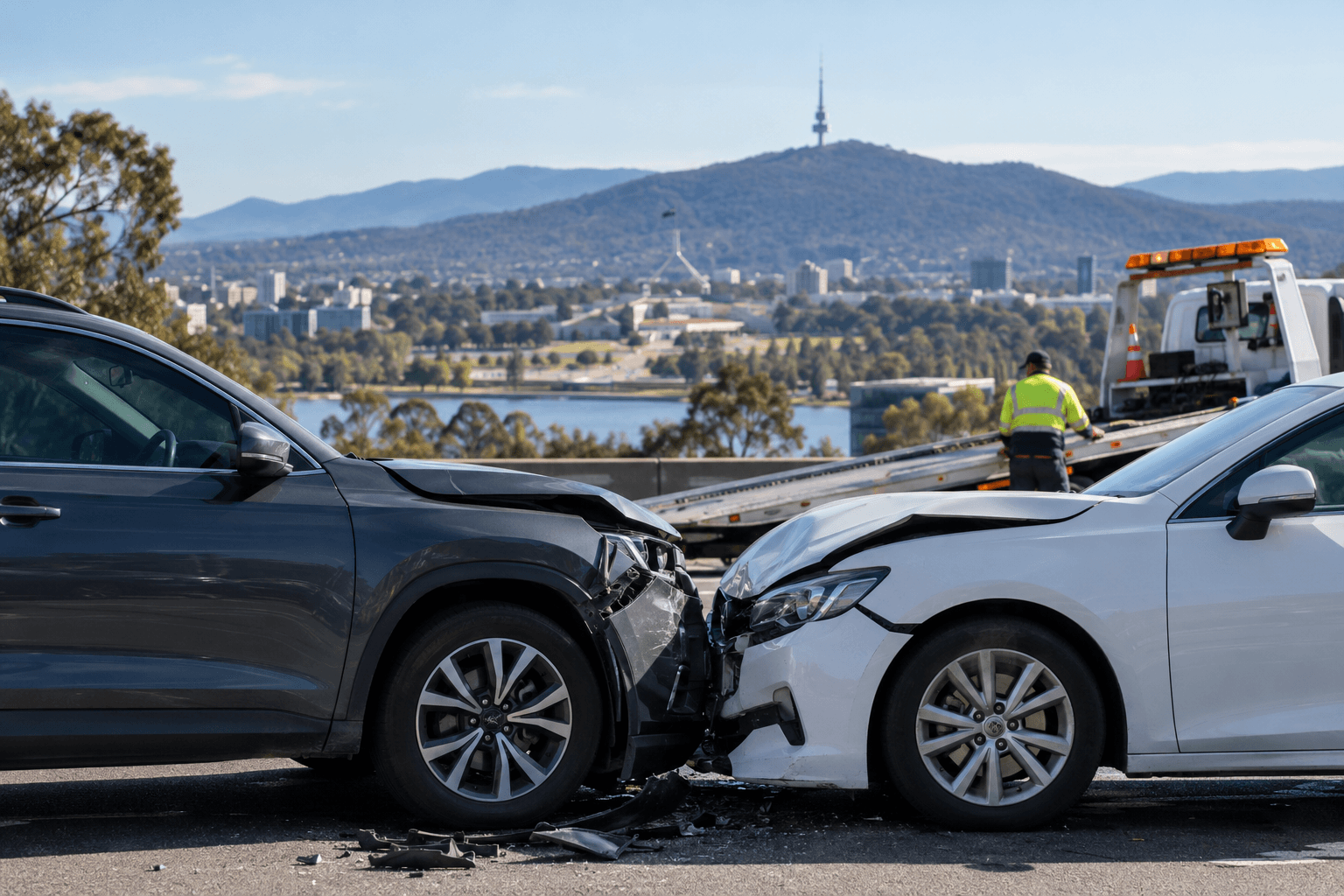
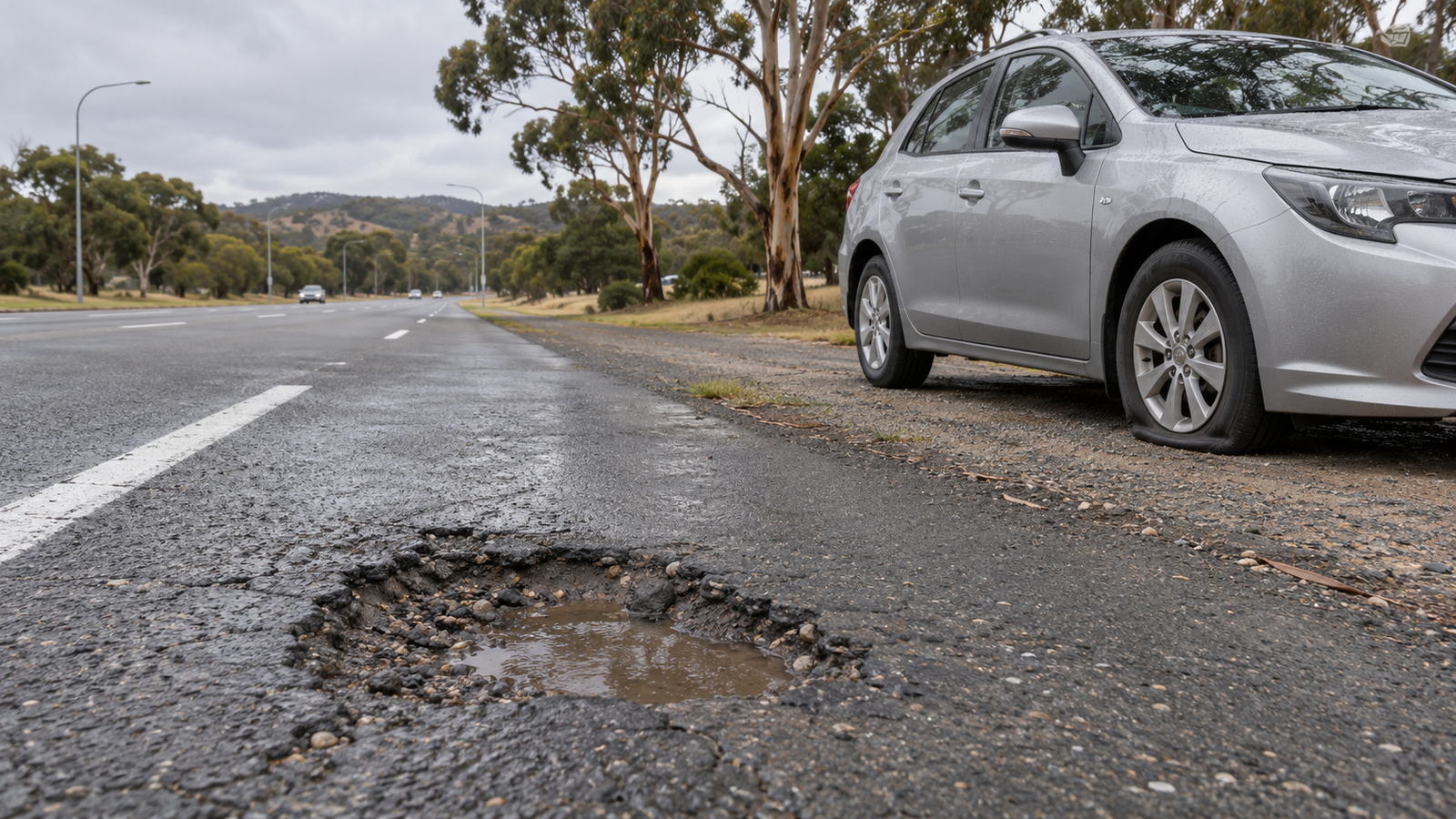
A pothole can leave you paying for a tyre, an alignment and a tow before anyone decides who should cover the bill. Canberra drivers can seek compensation, but a damaged vehicle does not automatically establish ACT Government liability. [2]
By 23 July 2024, the ACT Government had paid A$869,591 in pothole-related claims since 1 January 2022. That is a historical payout figure—not the cost of pothole damage in 2026, and not the total loss borne by drivers. [3]
The October 2026 road-maintenance audit puts the earlier disruption in context. It identified historical backlog peaks of 393, 414 and 266 outstanding pothole work orders. These count maintenance jobs awaiting action, not vehicles damaged. [1]
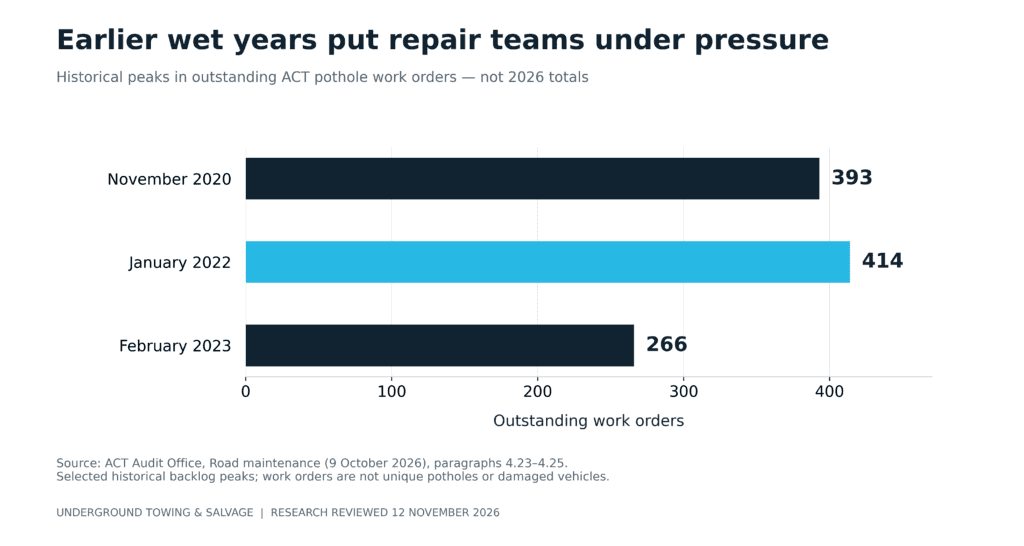
Figure 1. Selected historical backlog peaks reported in the 2026 audit. Dates refer to the observations, not publication. [1]
This report separates documented road problems from current maintenance activity, explains what a repair bill can include, and sets out the evidence to keep before making a claim.
The roads behind the reports
A road name alone tells you too little. The direction, lane, nearest junction and date are what make a report useful—and what help connect a particular impact with a particular defect.
Documented historical locations
An ACT freedom-of-information release contains Tuggeranong Parkway service requests from 2022–2024. The department included the wider Parkway because it could not isolate the requested Cotter Road–Hindmarsh Drive section. Selected 2022 entries show where motorists reported problems; they do not establish present-day hazards. [4]
Location in the released records | Dated report |
Parkway northbound, beyond the Molonglo River bridge | 9 September 2022: reports of tyre damage. |
Parkway northbound, between Hindmarsh Drive and Cotter Road | 13 September 2022: tyre and wheel-rim damage reported. |
Parkway northbound exit to Cotter Road | 17 October 2022: punctured tyre reported. |
Parkway at Sulwood Drive, Kambah | 23 November 2022: recurring pothole reported. |
These are community reports, not independently inspected damage findings or approved claims. Several entries may concern the same defect. They cannot support a ranking of Canberra’s worst roads. [4]
What the 2026 maintenance updates show
On 4 March 2026, the ACT Government reported recent resurfacing on the northbound Tuggeranong Parkway at Weston Creek and the Barton Highway at Crace. It also announced Canberra Avenue works in Fyshwick towards the Queanbeyan border. [5]
The City Services schedule for 11 November listed asphalt patching on Caswell Drive in Aranda, the Lhotsky Street–Florey Drive intersection, Box Hill Avenue in Conder, Custance Street in Farrer and the Ashley Drive–Ellerston Avenue intersection. [6]
Maintenance listings show where work is planned. They do not measure damage claims or the chance of hitting a pothole. Check the linked live schedule before travelling; weather can change the programme.
Why a filled pothole can return
The 2026 audit explains that cold-mix filling is a temporary safety treatment and does not fix the underlying structural failure. It also warns that road-condition index scores can change with system settings. Neither a repair count nor a headline condition score alone tells a driver whether a particular stretch is sound. [1]
What a pothole can cost
There is no single repair price. A tyre-only impact and a damaged wheel or suspension are different jobs. Ask the repairer to separate impact damage, existing wear, parts, labour and any further checks.
Published local price example | Amount and scope |
205/55 R16 Kumho EcoWing ES33 tyre | A$130 fitted at All Round Tyres; fitting, balancing and old-tyre disposal included. [9] |
Two-wheel alignment | From A$89, indicative, at Canberra Tyres. Four-wheel alignment and component repairs cost extra. [10] |
Underground Towing Canberra service | From A140+GST,orA154 including GST. Confirm the quote for your location and vehicle. [11] |
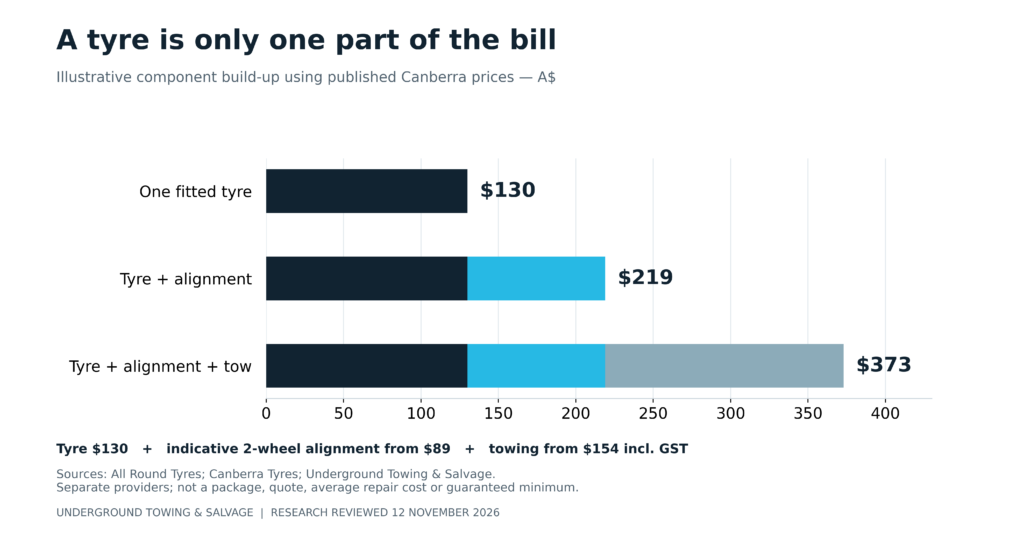
Figure 2. Illustrative A$373 total using separate advertised components, checked 12 November 2026. [9–11]
The A$373 example excludes wheel repair or replacement, suspension work, extra tyres, storage and alternative transport. It assumes one suitable replacement tyre, a two-wheel alignment at the starting price and towing at its starting price. It is not a Canberra average or a bundled offer.
Tyre size, load and speed ratings, wheel condition and the vehicle manufacturer’s requirements determine what can be fitted. An alignment cannot repair a bent component. Obtain an itemised diagnosis before treating the cheapest visible problem as the whole repair.
After the impact, make the vehicle safe
Move out of the traffic stream only if you can do so safely. Use hazard lights and stop somewhere protected from moving traffic. Do not walk into a live lane to photograph or measure a pothole. Call 000 if someone is injured or there is an immediate threat to life.
Do not keep driving on a damaged tyre
A flat tyre, a new sidewall bulge, visible wheel damage, strong vibration or unstable steering warrants stopping and getting assistance. Michelin warns that an impact can damage the tyre’s internal structure and create a bulge on either sidewall, including the side you cannot see. A bulging tyre needs replacement, not a puncture repair. [13]
If a roadworthy spare can be fitted safely, follow the vehicle handbook and the spare’s speed and distance restrictions. Otherwise arrange recovery. A car that still moves is not necessarily safe to drive to a workshop.
Build an evidence record while details are fresh
The following is a practical evidence checklist, not a claim that every item is mandatory in the ACT online form. Collect what you safely can and explain anything you could not obtain.
Pinpoint the impact. Record the date, time, road, direction, lane and nearest intersection or landmark. Save a map pin and describe the approach.
Preserve the scene evidence. Save original dashcam footage before it is overwritten. Take photographs from a safe place; retain the original files. If returning would be dangerous, say so.
Document the vehicle damage. Photograph the affected tyre, wheel and visible damage. Ask the repairer for a written diagnosis linking the damage to the reported impact where they can reasonably do so.
Keep the costs traceable. Retain itemised quotes, invoices, proof of payment and the towing receipt. Ask the repairer to photograph removed parts before disposal and check whether an assessor needs to inspect them.
Keep the correspondence. Save witness contact details with their permission, the road-report reference, the claim acknowledgement and any insurer instructions.
When arranging a tow, give the operator your safe pickup location, travel direction, vehicle model, damaged corner and whether the wheels roll and steer. Agree the destination and price before dispatch where possible.
Underground Towing & Salvage provides Canberra towing on 0421 064 666. Our role is vehicle recovery and transport; a repairer assesses the damage, and the authority or insurer decides the claim. [11]
How to report the road and make a claim
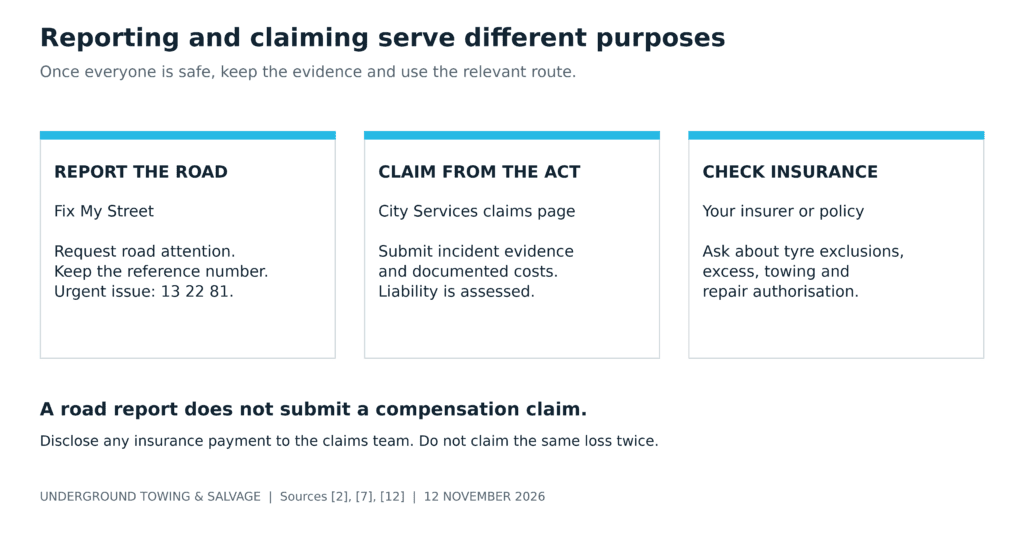
Figure 3. Road maintenance, government compensation and insurance are separate processes. Follow the current form and your own policy. [2, 7, 12]
1 Report the pothole
Use Access Canberra’s Fix My Street service for the road defect. Online reporting uses an ACT Digital Account, which also lets you track the request. Urgent issues should be reported on 13 22 81. Keep the reference number. [7]
City Services lists an indicative 5–10 working days for urgent pothole repairs, subject to weather and priority. Non-urgent repairs are assessed through the annual resurfacing programme. Those are maintenance timeframes, not compensation-decision deadlines. [8]
2 Submit a separate compensation claim
Go to the City Services “Making a claim for pothole damage” page and select its online claim form. Fix My Street does not lodge that claim for you. Provide an accurate incident account and supporting documents; retain a copy and the acknowledgement. [2] [7]
The ACT expressly says it is not automatically liable. In a 2023 explanation to ABC, Roads ACT said its assessment considered whether it knew of the defect and had time to rectify it. Evidence of an earlier report may therefore matter, but does not guarantee payment. [2] [14]
3 Check who manages the exact location
An ACT address, a national-capital precinct and a road across the NSW border may involve different managers. Access Canberra directs National Capital Authority matters to the NCA. For an incident in Queanbeyan or elsewhere in NSW, use the NSW road-reporting guidance to identify the responsible authority rather than assuming the ACT process applies. [7] [15]
Before paying, check the insurance position
Do not assume comprehensive cover will pay for a damaged tyre. The AAMI Comprehensive Car Insurance PDS reviewed for this report excludes tyre damage caused by braking, punctures, road cuts or bursting. That is an example of why the exact policy wording matters, not a finding about every insurer or every pothole claim. [12]
Ask your insurer whether the particular damage is covered, whether towing requires authorisation, which excess applies and whether it needs to inspect the vehicle before repairs. Ask separately about tyres, wheels, suspension and any hire-car benefit. Keep its answers in writing where possible.
For an insured repair, compare the covered amount with the applicable excess. If a hypothetical covered repair is A600andtheexcessisA750, there is no positive payment under that simple calculation. If it is A1,800withaA750 excess, the difference is A$1,050 before any other policy adjustments. These are arithmetic examples, not insurance quotes or coverage decisions.
Tell the ACT claims team if an insurer has paid or is pursuing recovery, and tell the insurer about any government payment. Identify the unreimbursed costs clearly; do not seek payment twice for the same loss.
If the claim is delayed or refused
Use the reference number to ask what information remains outstanding and when to expect an update. Keep the exchange in one clear record. Do not assume an old media report about processing delays describes the current queue.
If the claim is declined, request the reasons in writing. Check whether the decision turns on location, prior knowledge of the defect, the repair response, causation or proof of cost. Supply relevant missing evidence rather than simply resending the original account. Ask what review options are available. City Services also says a claimant may seek independent legal advice. [2]
What this means for Canberra drivers
The useful sequence is straightforward: stop further damage, record the incident safely, get the vehicle assessed, report the road and pursue the appropriate claim. A receipt proves expenditure; a clear evidence trail helps explain why that expenditure followed this particular impact.
Method and limits
Underground Towing & Salvage reviewed the linked sources on 12 November 2026. “2026” denotes this report’s review year; it is not a complete calendar-year damage census. The report combines official documents, published community reports, provider prices and practical guidance. It does not use private towing-job or insurance-claim records.
The road examples are selected, not exhaustive or ranked. Community reports may duplicate a defect and do not prove liability. Maintenance schedules are snapshots. The A$869,591 payout figure ends in July 2024; it is not inflated to 2026 prices. No claims success rate or average repair bill has been calculated from incompatible datasets.
Sources and figure notes
Numbered references identify the sources below. In-text links open the supporting material. Prices and online processes should be checked again when booking or lodging a claim.
[1] ACT Audit Office — Road maintenance, 9 October 2026
Figure 1: paragraphs 4.23–4.25, printed pages 85–86. The three bars are selected peak observations, not annual totals.
[2] ACT City Services — Making a claim for pothole damage
[3] ACT Legislative Assembly — Estimates 2024–2025 report, paragraph 9.24
Historical payment total and outstanding claims as at 23 July 2024.
[4] ACT City Services — FOI 25-034, released 7 April 2025
Scope: decision letter, PDF page 6. Selected road records: PDF pages 16, 20 and 22. Reports are allegations recorded by the service.
[5] ACT Government — Major roads infrastructure update, 4 March 2026
[6] ACT City Services — Road resurfacing and repairs
[7] Access Canberra — Fix My Street
[8] ACT City Services — Service requests and feedback timeframes
[9] All Round Tyres — Current stock and fitted prices
Figure 2: one 205/55 R16 Kumho EcoWing ES33 at A$130 fitted. This is a product example, not a tyre recommendation.
[10] Canberra Tyres — Wheel alignment pricing
Figure 2: indicative two-wheel alignment from A$89; not a four-wheel or suspension-repair price.
[11] Underground Towing & Salvage — Canberra towing
Figure 2: advertised A140+GSTconvertedtoA154 using 10% GST. Actual towing depends on the job.
[12] AAMI — Comprehensive Car Insurance PDS, general exclusions, Tyres
Policy example only. The version applicable to an individual policy, any supplementary PDS and the insurance certificate govern cover.
[13] Michelin Australia — Tyre sidewall damage
[14] ABC News — ACT pothole compensation backlog, 16 February 2023
[15] Service NSW — Report a pothole or damaged road
Figure 2 uses 130 + 89 = 219 and 219 + 154 = 373. The providers are separate and no joint package is implied. Figure 3 summarises the reporting routes; its evidence and coordination advice is editorial guidance. This report provides general information, not a mechanical diagnosis or legal advice.